Why We Worship This Way
If you are new to St. Mark’s, Episcopal worship can sometimes seem like everyone else received an instruction manual that you somehow missed.
People stand, sit, kneel, bow, cross themselves, sing hymns written long before any of us were born, follow a Bible through the church, share Communion from a common cup, and then gather down the hall for coffee as though that were somehow part of the whole thing.
In a sense, it is.
Our worship has grown out of centuries of Christian prayer. Many of its customs reach back well before there was an Episcopal Church, an Anglican Church, or even the divisions we now call “Catholic” and “Protestant.”
But there is something important to know before we explain any of it:
You do not have to know the customs to belong here.
Watch what others do. Join in when you want. Ask questions. Or simply pray. The purpose of worship is not to perform the service correctly. It is to worship God together.
-
The service may end with “Thanks be to God,” but Christian community does not end at the church door.
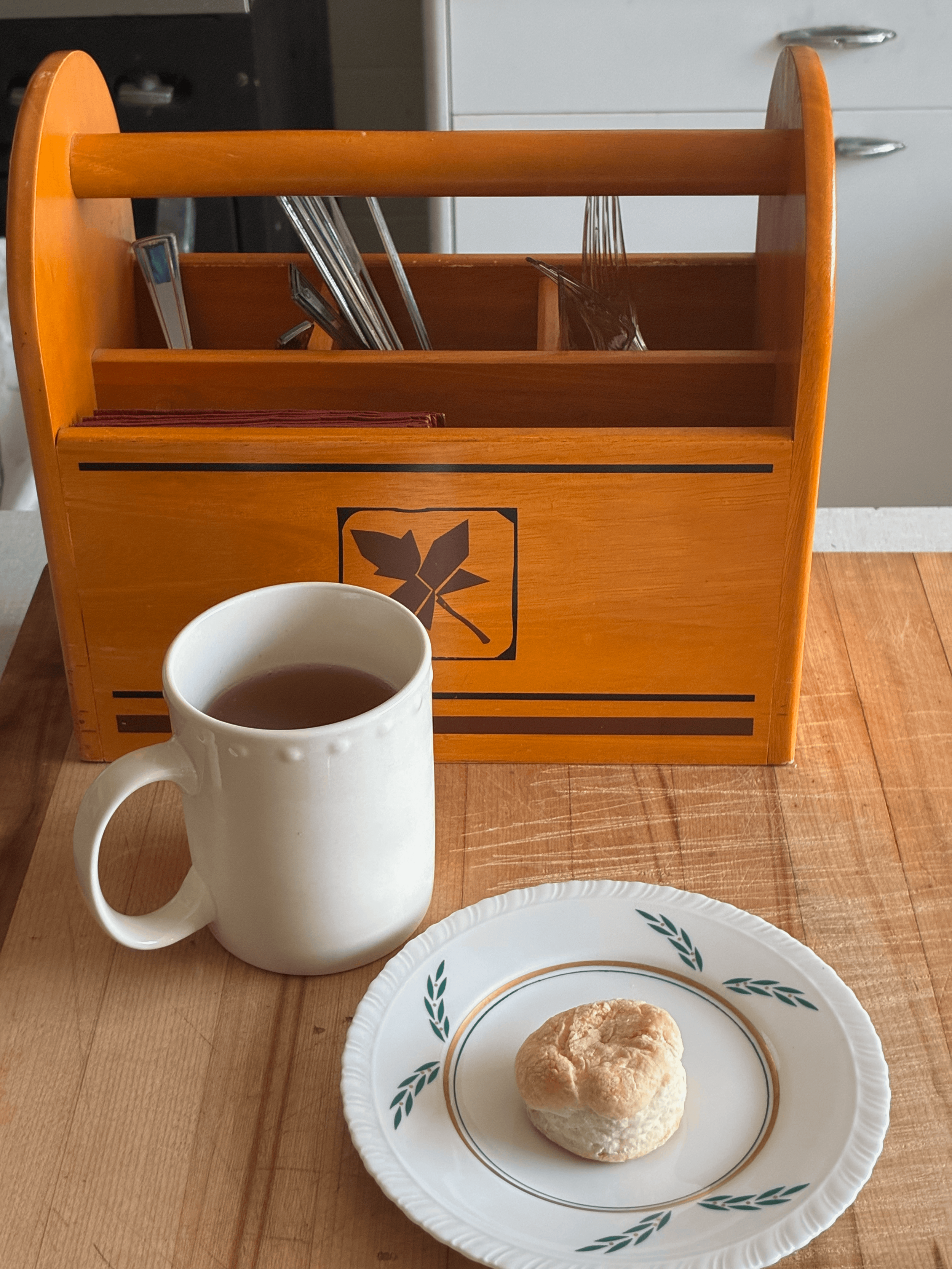
Coffee hour is one of the simplest ways St. Mark’s practices something important: church is not something we passively consume. It is a community we enter.
During worship, we pray beside people whose lives we may know very little about. Over coffee, those strangers acquire names. Someone asks how your week went. Children meet adults who will watch them grow up. A visitor becomes a familiar face. Someone notices that a person has been missing. Friendships form between people who might never otherwise have met.
That matters.
The New Testament describes Christians not simply attending worship but becoming the Body of Christ together. That takes more than occupying the same pews for an hour.
So coffee hour is not merely refreshments after church. It is one of the places where worship begins turning into relationship.
You do not have to stay. You certainly do not have to drink coffee. But if you are new to St. Mark’s, we hope you will occasionally give us the chance to know you.
-
Most of us do not drive around listening to eighteenth-century hymns accompanied by pipe organ.
That is perfectly fine.
Church music has a different purpose from most of the music we listen to during the week. We sing together rather than simply listening to someone else perform. That means choosing music that a room full of different generations, tastes, voices, and abilities can share.
The organ became especially useful for Christian worship because it can support an entire congregation singing together without requiring the music to become a performance.
And older hymns give us something else: words Christians have carried with them for generations.
They remind us that Christianity did not begin with us.
That does not mean Christian music stopped developing in 1920. The Christian tradition includes ancient chant, Gospel music, spirituals, contemporary worship songs, folk traditions, global music, charismatic praise, and much more.
At St. Mark’s, the goal is not to preserve one musical period in amber. It is to sing together in ways that help the whole congregation pray.
-
Our bodies participate in worship along with our minds.
Traditionally:
We stand for praise, singing, the Gospel, the Creed, and other moments of communal prayer.
We sit when listening and receiving, particularly during readings, sermons, and instruction.
We kneel when humility, confession, or particularly focused prayer seems appropriate.
But these are invitations, not fitness requirements.
If standing hurts, sit.
If kneeling is difficult, remain seated or stand.
If everyone else suddenly moves and you have absolutely no idea why, you have just experienced a perfectly normal first Episcopal service.
-
At the Eucharist, the Gospel Book may be carried from the front of the church into the congregation before the Gospel is read.
That movement makes something visible:
Christ comes among his people through the proclamation of the Gospel.
Instead of treating Scripture as information delivered from a distant platform, the congregation physically gathers around the Gospel.
Some people turn toward the Gospel Book as it passes. Some bow. Some make the sign of the cross.
The book itself is not being worshiped. These gestures express reverence for Christ whose Gospel is being proclaimed.
-
Making the sign of the cross is simply a physical prayer.
Christians may trace the cross over themselves when invoking the Trinity, hearing words about resurrection, receiving absolution, beginning prayer, receiving Communion, or at other moments that remind them of their baptism into Christ.
Some Episcopalians cross themselves frequently.
Others never do.
Both are Episcopalian.
-
For much the same reason people sometimes bow their heads when praying.
The body can express reverence before the mind finds words for it.
Some people bow toward the altar. Some bow when the cross passes. Some genuflect by briefly bending a knee. Some make a deeper bow. Some do none of these things.
These customs developed over centuries and mean somewhat different things to different Christians.
They are devotions, not entrance requirements.
The goal is reverence, not choreography.
-
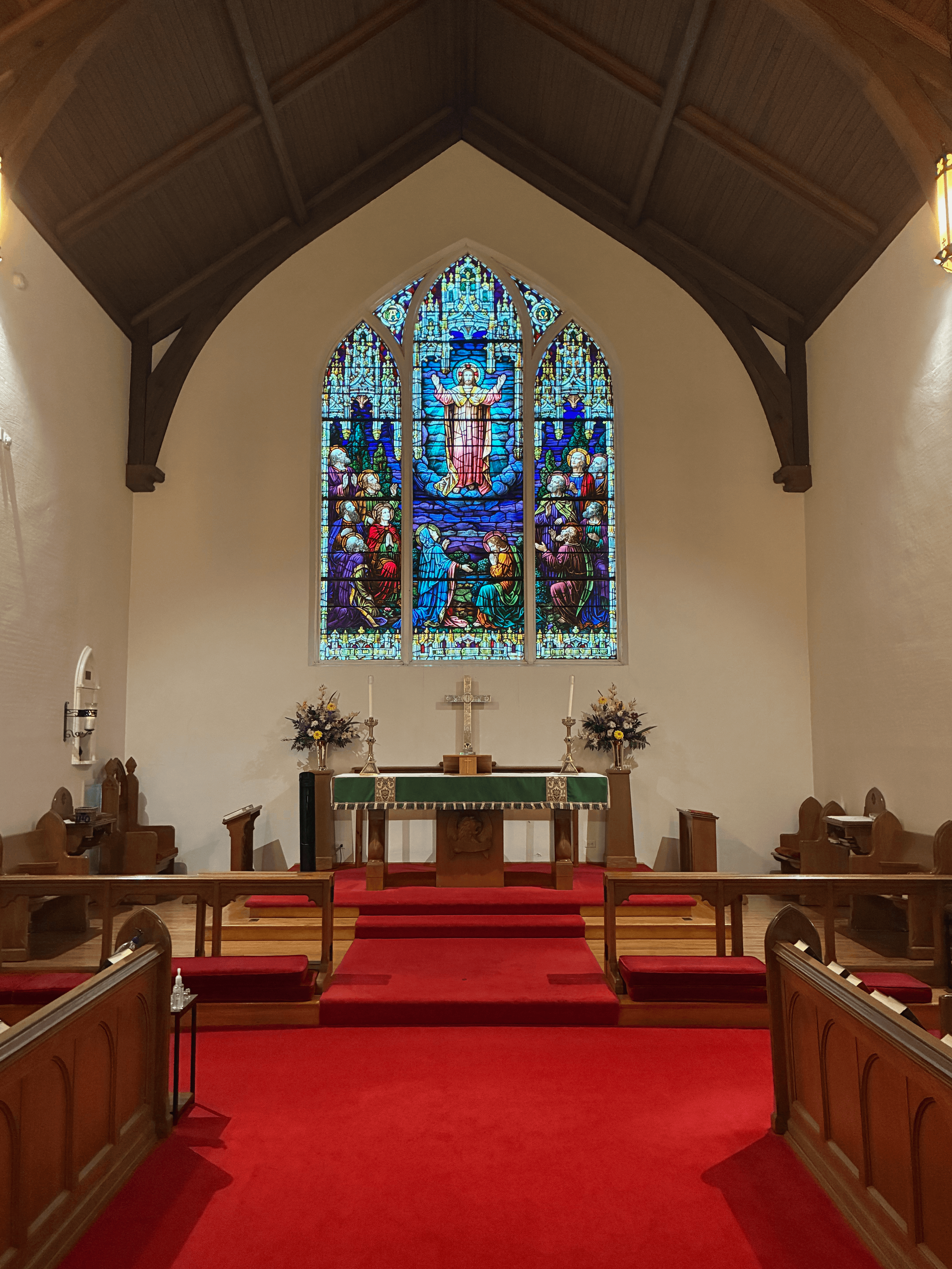
Church buildings themselves often tell a theological story.
The Baptismal Font
You may notice that the baptismal font is near the entrance to the nave.
That placement is intentional.
Baptism is our entrance into the Christian community.
Before Christians come to the altar for Communion, we remember that we first came through the waters of Baptism.
Every time we enter the church and pass the font, the building quietly reminds us who we are: people baptized into Christ.
The Nave
The main room where the congregation gathers is called the nave.
The word is related to the Latin navis, meaning “ship.”
For centuries Christians have imagined the Church as a vessel carrying God’s people through uncertain waters.
The nave is therefore not an auditorium filled with spectators.
It is the gathering place of the people who are themselves the Church.
The SanctuaryThe sanctuary is the area surrounding the altar.
It is set apart for the celebration of the Eucharist, not because God lives only in that part of the building, but because Christians have long found it helpful to create physical places that direct our attention toward prayer.
The Altar
At the center is the altar, sometimes also called the Holy Table.
It recalls several dimensions of Christian faith at once.
It is a table, because Jesus gathered his disciples around a meal.
It recalls sacrifice, because the Eucharist proclaims Christ’s self-giving love on the cross.
And it points toward the heavenly banquet, the biblical image of creation finally gathered and reconciled in God.
That is why the Eucharist sits at the heart of Episcopal worship.
The Cross
The cross reminds us of the central paradox of Christianity.
An instrument of death became the sign of God’s victory over death.
We do not display it because suffering is good. We display it because Christians believe suffering and death do not have the final word.
The Sanctuary Lamp
You may notice a candle burning near the place where consecrated Communion bread or wine is reserved.
This is commonly called the sanctuary lamp.
Its quiet flame indicates the reserved Sacrament and serves as a visual reminder of Christ’s presence among his people.
It is not magic.
It is simply one of the many ways the church building teaches without speaking.
-
The church year has seasons, just as the natural world does.
Vestments, altar hangings, and other decorations change color to help us recognize where we are in the Christian story.
You may see:
White or gold for Christmas, Easter, baptisms, weddings, funerals, and celebrations of Christ.
Purple or blue during Advent and purple during Lent, seasons of preparation and reflection.
Red at Pentecost and on occasions associated with the Holy Spirit, apostles, and martyrs.
Green during the long seasons when the Church concentrates on growing in the life and teaching of Christ.
The colors are not theological traffic signals. They simply allow the calendar itself to become visible.
-
The clothing worn by clergy and other ministers is called vesture.
Different garments developed at different points in Christian history, but they share an important purpose:
during worship, attention should be directed toward the ministry being performed rather than toward the personality performing it.
The priest may wear an alb, stole, chasuble, cassock, surplice, or other traditional garments depending on the service and local custom.
Deacons, bishops, acolytes, choirs, and other ministers may wear clothing associated with their particular ministries.
The stole is especially associated with ordained ministry, and its color usually follows the season of the church year.
Vestments remind us that the person at the altar is serving in a role larger than themselves.
-
At the Last Supper, Jesus gave his disciples bread and a cup.
For that reason, Christians have traditionally shared Communion as a common meal rather than as unrelated individual acts of devotion.
The common chalice makes that theology visible:
many people, one table, one bread, one cup, one Body of Christ.
Local practices for receiving the wine can vary. In some settings people drink directly from the chalice. In others wine may be administered differently.
Some Christians practice intinction, dipping the consecrated bread into the wine before receiving it.
However Communion is administered, the symbolism remains communal rather than individual: we receive the same Eucharist together.
-
Sometimes you will see someone receive the consecrated bread but not the wine.
That is completely acceptable.
Historic Christian teaching understands Christ to be fully received under either form of Communion. A person who receives only the bread has not received “half Communion.”
People may abstain from the wine because of health, medication, recovery from addiction, personal preference, or another reason that is nobody else’s business.
-
A person may come forward but not wish to receive Communion.
Crossing the arms over the chest traditionally signals that the person would like to receive a blessing instead.
This may include children who have not yet begun receiving Communion, visitors from traditions with different practices, people who are uncertain about receiving, or anyone who simply wants prayer.
No explanation is necessary.
-
You may hear Episcopal priests addressed in several ways.
Some congregations traditionally use Father David or Mother Susan.
Others simply use David or Susan.
You may also hear the rector, our priest, pastor, or another appropriate title.
“Rector” actually describes an office rather than a form of address. A rector is the priest called to lead a particular parish. Other congregations may be served by priests-in-charge, interim priests, supply clergy, or other arrangements.
The family language of “Father” and “Mother” developed as a way of describing pastoral and spiritual relationship.
It does not mean clergy belong to a spiritually superior class.
Episcopal clergy are ordained to particular ministries within a Church in which every baptized person has a vocation.
If you are not sure what to call someone, ask them. Clergy have survived this question before.
-
Yes.
The Episcopal Church descends from the Church of England and occupies an unusual place in Christianity.
The English Reformation unquestionably made Anglicanism part of the Protestant Reformation. We proclaim the authority of Scripture, emphasize preaching, worship in the language of the people, and believe the whole people of God should read and encounter the Bible.
At the same time, Anglicans retained the ancient Creeds, bishops, priests and deacons, sacramental worship, the Eucharist, the historic church year, and many practices inherited from the early and medieval Church.
That means Episcopalians occasionally accomplish the impressive feat of seeming too Catholic for Protestants and too Protestant for Catholics.
We are reasonably comfortable with that.
Anglicanism has generally been less interested in forcing every Christian question into one theological system than in gathering Christians around common prayer.
The Book of Common Prayer embodies that instinct.
We do not need everyone in the room to have identical spiritual temperaments in order to worship together.
-
At St. Mark’s, we believe these parts of the Christian tradition belong together more naturally than Christians sometimes imagine.
We are evangelical because the evangel is the Good News of Jesus Christ.
We expect Scripture to speak. We believe people can encounter Christ, respond to his call, grow in faith, and share that faith with others.
We are Pentecostal in the oldest sense of the word because we believe the Holy Spirit is alive and active.
Christianity is more than agreeing with doctrines or maintaining an institution. We pray for the Spirit to change lives, give gifts to God’s people, guide the Church, inspire prayer, heal what is broken, and send Christians into the world.
And we are sacramental because Christianity is embodied.
God meets us through water poured over a human body, bread placed into human hands, wine shared around a table, oil placed upon a forehead, words spoken aloud, hands extended in blessing, and ordinary people gathered in an ordinary building.
Word and Spirit.
Scripture and Sacrament.
Personal faith and common prayer.
None needs to cancel out the others.
-
The genius of the Anglican tradition may be contained in its oldest description of our worship:
Common Prayer.
Not identical opinions.
Not identical politics.
Not identical personalities.
Not identical spiritual experiences.
Common prayer.
A person with a deeply evangelical faith may kneel beside someone shaped by Catholic spirituality.
Someone who experiences the Holy Spirit intensely may receive Communion beside someone whose faith is quieter and more contemplative.
A lifelong Episcopalian may share a pew with someone who has never opened a prayer book.
For an hour, we allow the ancient prayers of the Church to become our prayers.
And gradually something happens.
We stop being merely individuals who happen to worship in the same building.
We become a congregation.
-
You will.
So will we.
Eventually the organist will begin the wrong verse, somebody will stand while everyone else sits, an acolyte will head in the wrong direction, someone will forget to bow, the lector will mispronounce a biblical name, and even the priest will occasionally lose the page.
Christian worship has somehow survived for two thousand years.
The gestures, vestments, music, architecture, candles, seasons, and ceremonies matter because they can point beyond themselves toward God.
But they are signs, not the destination.
So we try to take worship seriously without taking ourselves too seriously.
You are welcome to cross yourself.
You are welcome not to.
You may kneel, stand, bow, sit, sing loudly, sing quietly, or spend your first several Sundays simply figuring out what everyone else is doing.
The important thing is not whether you performed Episcopal worship correctly.
The important thing is that you came to pray with us.
And when the service is over, there will probably be coffee.
Come join us.
That part matters too.